


Most seat cover installation problems come from fit path, strap tension, blocked access, or forcing a universal cover onto a seat shape it was never meant to cover. If your Coverado set is wrinkling, sliding, hiding a buckle, or fighting you at the rear bench, start with the fixes below before you assume the cover is wrong. If you're still choosing car seat covers, match the cover style to your seat layout first: bucket, bench, split bench, armrest, and headrest type all matter.
Installation Problem Checklist
Use this order when troubleshooting seat cover installation problems:
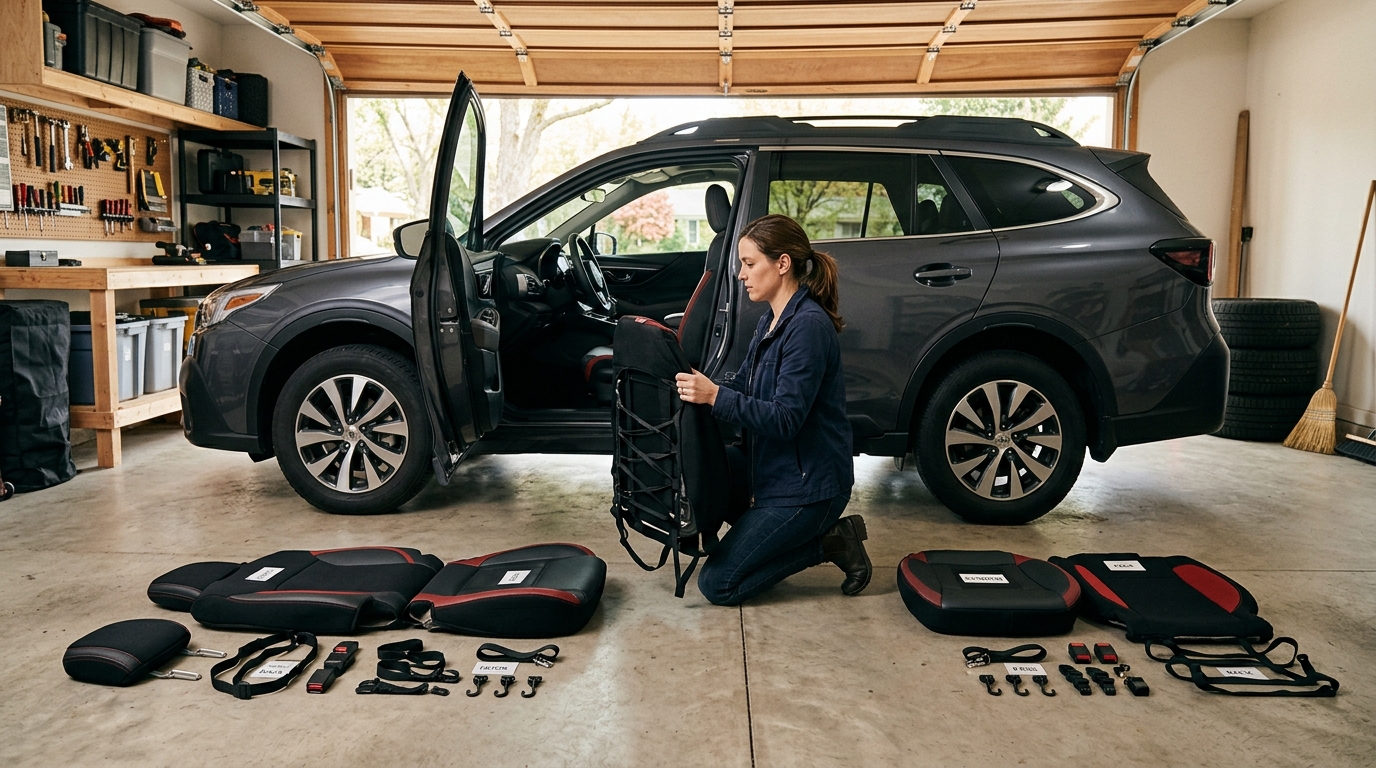
- Remove the cover and match each piece to the seat position.
- Expose every buckle, headrest post, and release lever.
- Route straps under the cushion, away from rails and wires.
- Tighten from the center outward.
- Sit, slide, buckle, then recheck.
| Problem | Likely Cause | Fast Fix |
|---|---|---|
| Seatback cover stops halfway | Headrest, armrest, or zipper path is blocking fabric | Remove the headrest, open the closure fully, and slide from the top corners |
| Center seam sits crooked | Left and right front covers are swapped | Match labels, center the top seam, then work down |
| Bottom cushion wrinkles | Rear flap wasn't tucked before tightening | Loosen straps, push the flap into the seat crease, retighten |
| Cover slides when you sit | Straps are routed over carpet or plastic trim | Route straps under the cushion to fixed loops or approved anchor points |
| Hooks pop loose | Hook angle is pulling sideways | Shorten the path and pull the hook straight, not diagonally |
| Buckle gets buried | Rear bench cover is over the latch opening | Pull every latch through before tightening |
| Power controls are covered | Side panel is pulled too low | Raise the side flap above the switch panel |
| Headrest cover sags | Cover size or post spacing doesn't match | Flip orientation, smooth corners, or use the smaller cover if supplied |
| 60/40 bench won't fold | One cover section crosses the split line | Reinstall the bench sections independently |
| Airbag tag area is blocked | Cover is rotated or not airbag-compatible | Stop and use only an airbag-compatible front cover |
Fit And Alignment Fixes
Crooked covers usually start before the first strap is tightened. Lay every piece on the seat it belongs to, then check the obvious stuff: headrest holes at the top, side panels facing outward, buckle openings toward the console or latch side. A 2024 Toyota Camry front bucket, a 2021 Honda CR-V rear bench, and a 2022 Ford F-150 SuperCrew front seat all have different bolsters. Universal fit covers need centering before tension.
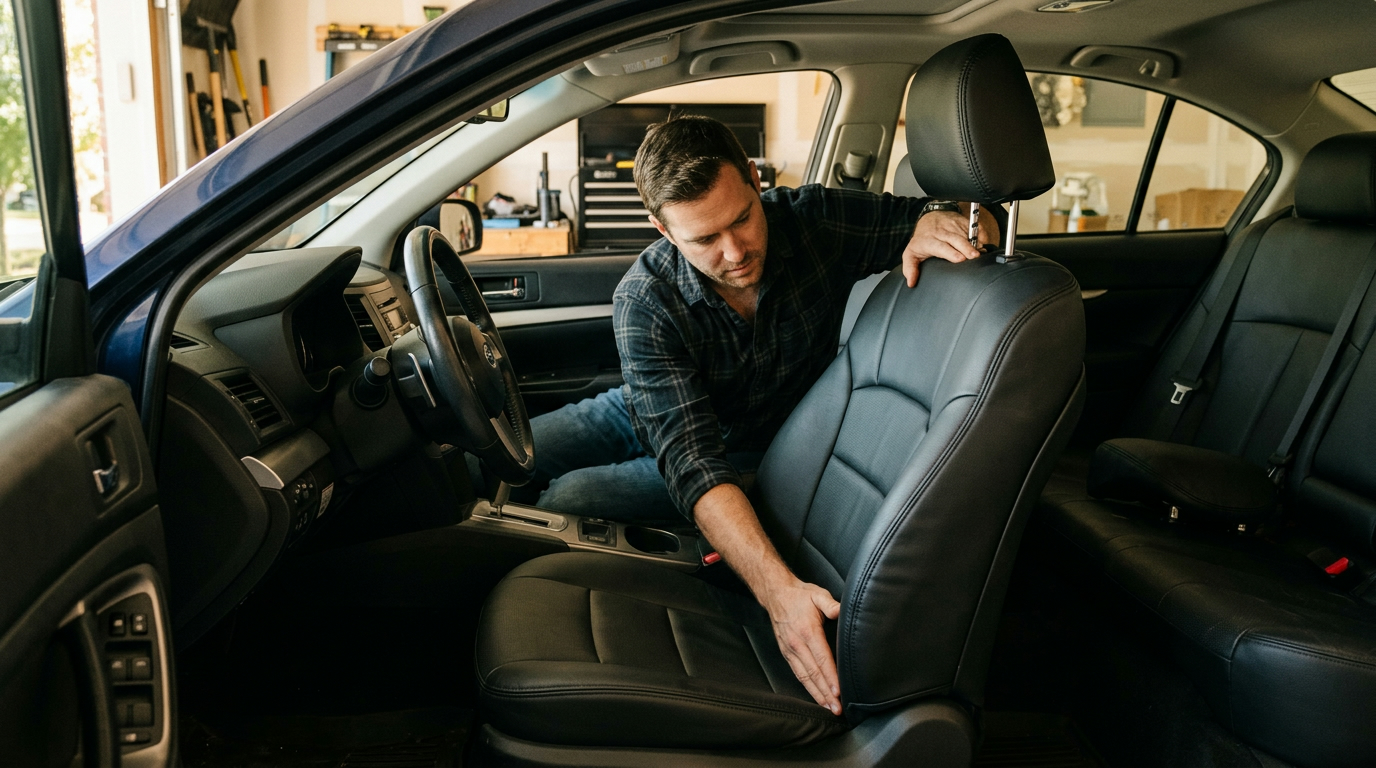
If the top seam is straight but the lower skirt is twisted, the cushion cover is probably trapped behind the seatback. Push the rear flap through the crease with your fingers, not a screwdriver (that vinyl trim scratches fast). For a visual reference, our Coverado seat covers installation video guide shows the tuck-and-tighten order before the straps go under the seat.
Cold material can feel smaller than it is. Let PU leather or padded covers sit indoors for 20 to 30 minutes, especially in winter states like Michigan, Minnesota, or Colorado. Warm material bends around bolsters more cleanly. Pulling harder usually makes the seam drift.
Straps, Hooks, And Sliding
The fastest way to make a clean install look bad is to tighten one side while the other side is still floating. Start at the center of the cushion, smooth toward both bolsters, then tighten left and right in pairs. Short pulls beat one big yank.
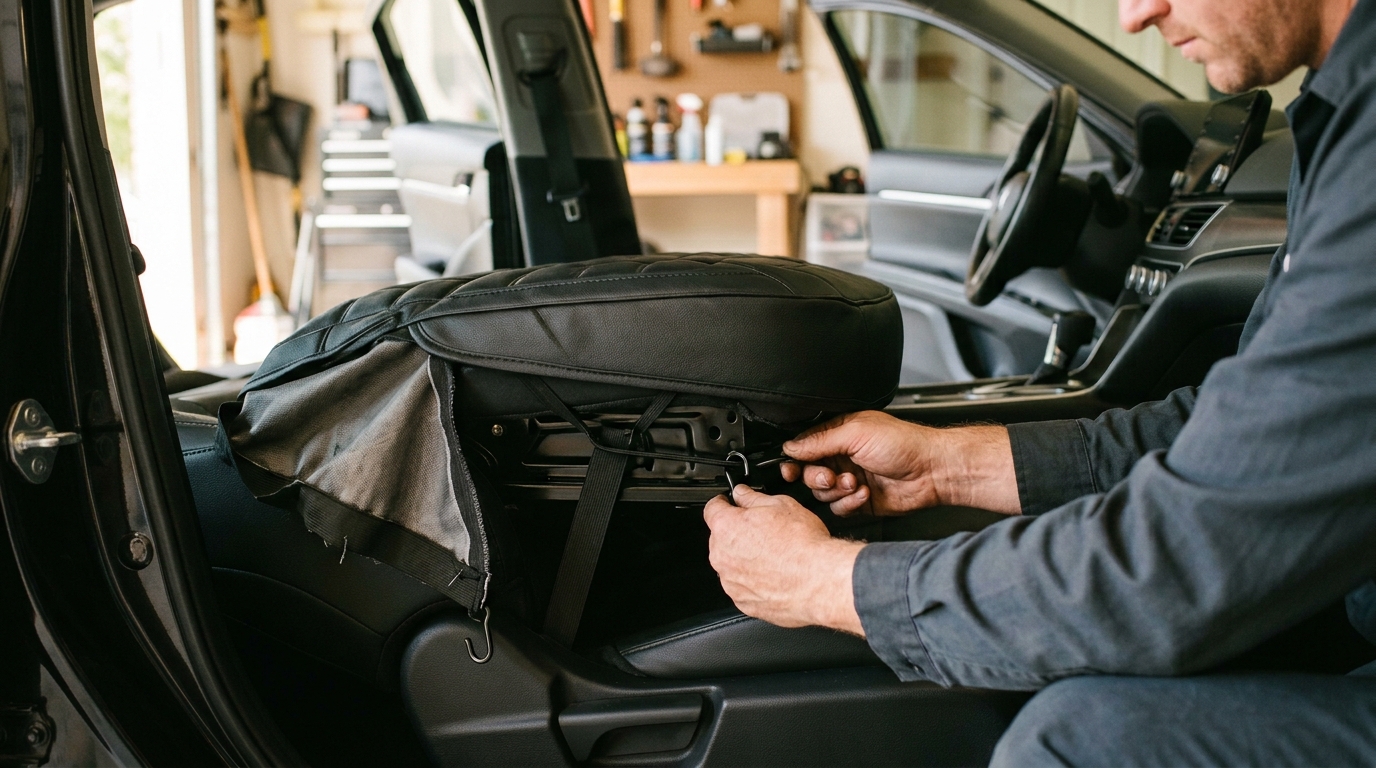
Do not clip hooks to moving seat rails, yellow airbag wiring brackets, thin plastic trim, or the recline cable. Move the seat all the way forward, route the strap where you can see it, then move the seat all the way back and check again. If anything rubs, clicks, or tightens as the seat moves, reroute it.
> Two-minute test: sit down, slide your hips once, buckle the belt, move the seat forward and back, then recline. If the cover shifts more than half an inch, the rear flap or underside strap still needs work.
Coverado customers report installation in under 30 minutes when they sort the pieces first and tighten last. The time sink is almost never the cover itself. It's usually one hidden strap wrapped around the wrong metal part under the seat.
Buckles, Airbags, And Controls
A seat cover can fit the cushion and still be wrong if it hides safety hardware. Every belt latch should stand upright and be reachable with gloves on. In vehicles like the 2023 Subaru Outback and 2021 Toyota RAV4, rear latches sit low in the bench, so tighten the cover only after you pull the latch heads through the opening.
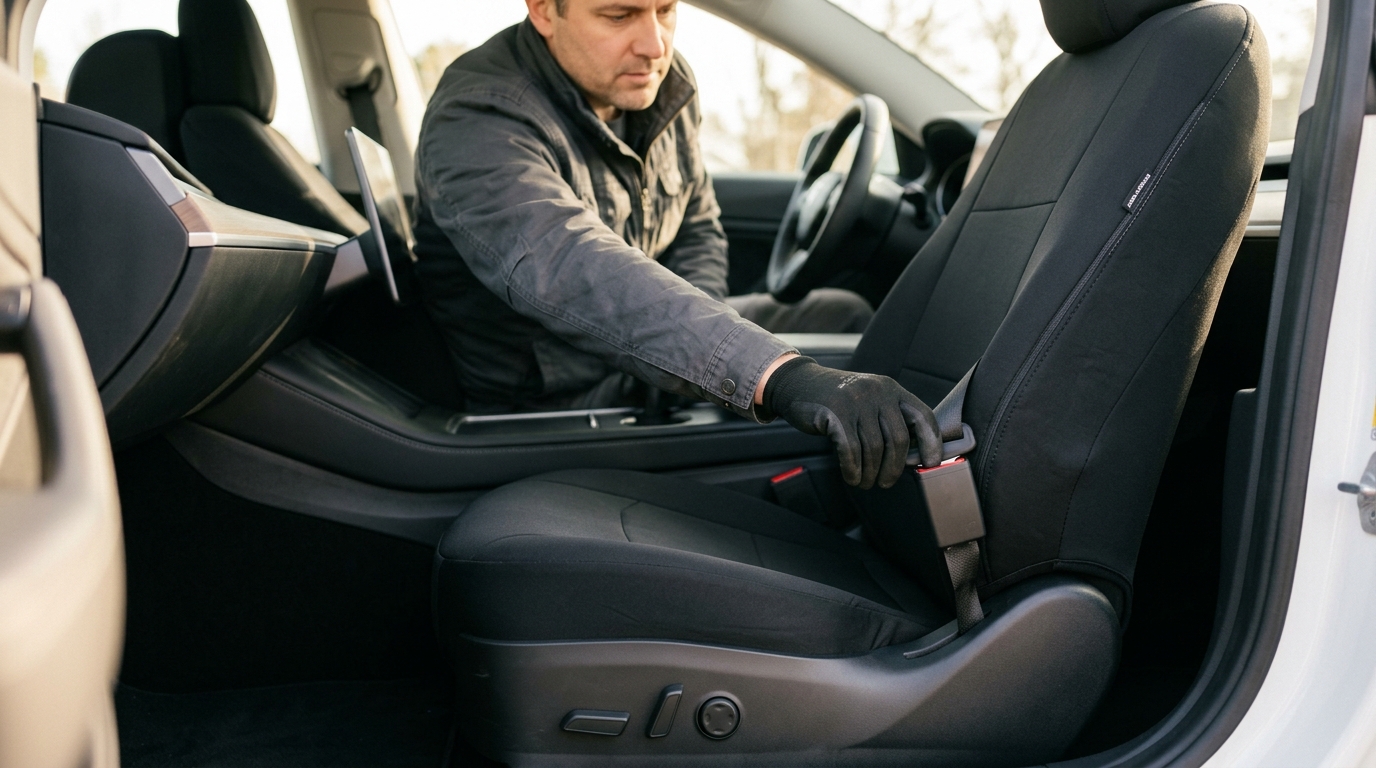
Seat belts are the primary restraint, and air bags are supplemental restraints. The National Highway Traffic Safety Administration's seat belt guidance and air bag guidance explain that relationship (National Highway Traffic Safety Administration, accessed June 2026). Practical takeaway: never bury a buckle, never cover an SRS airbag seam, and never cut a cover near the airbag label.
This advice gets stricter with front seats. If your 2019 Honda Accord, 2022 Ford F-150, or 2024 Chevrolet Equinox has seat-mounted side airbags, use a cover built with the correct side opening or release stitching. If the cover only fits by stretching across the airbag tag, remove it from that seat.
Rear Benches And Trucks
Rear benches cause more frustration than front buckets. Not scientific. Just honest. A 60/40 bench needs each section to fold without pulling the other side. A 40/20/40 truck bench adds a center armrest, center belt, or storage lid, and one wrong strap can lock the whole row in place.
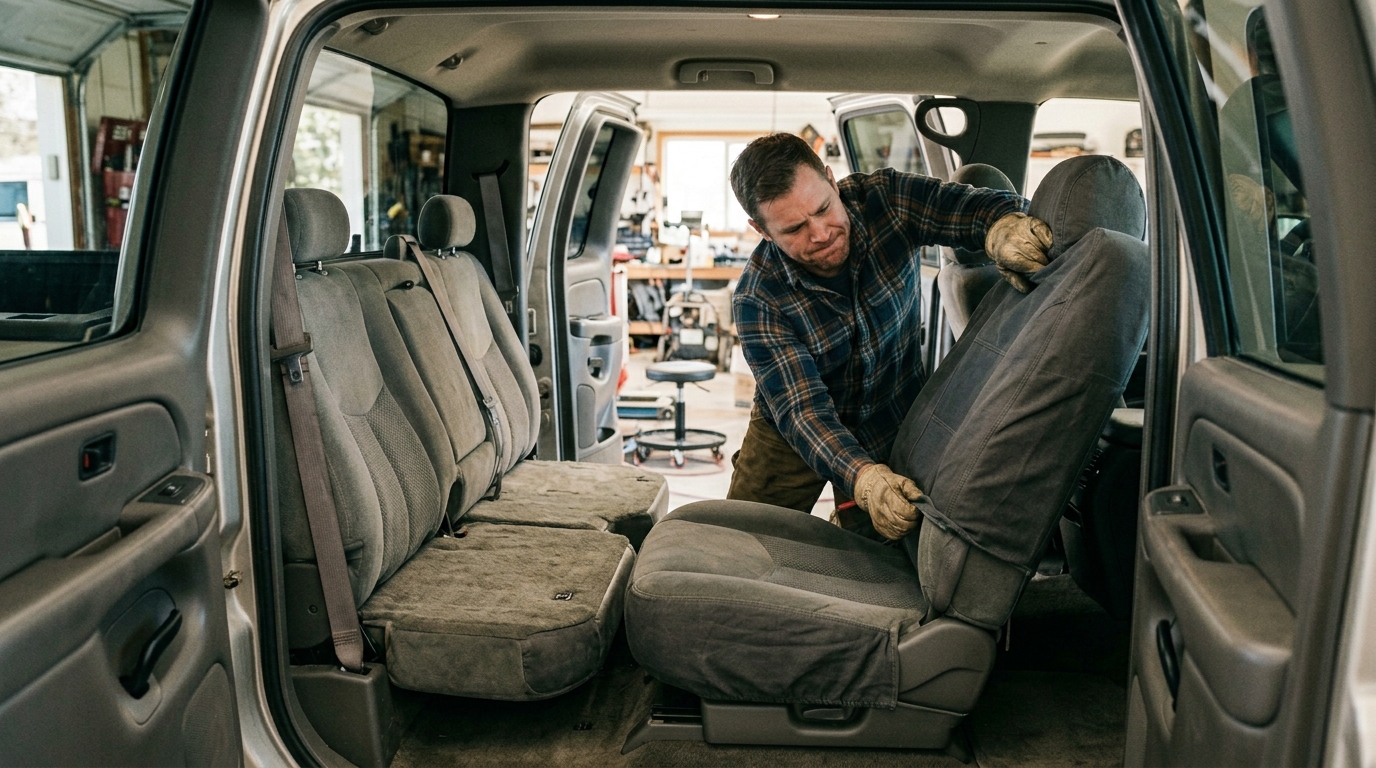
On a 2019-2024 Chevrolet Silverado 1500 Crew Cab, 2019-2024 Ram 1500 Crew Cab, or 2015-2024 Ford F-150 SuperCrew, check the center belt path before tightening the cover. If the belt comes from the roof or upper seatback, it needs a clear slot. If your pickup carries tools, dogs, or muddy boots, our best truck seat covers guide is a better fit reference than a sedan install page.
Rear headrests deserve their own check. Short, wide headrests often look loose if the cover is rotated 90 degrees. Tall adjustable headrests usually need the seam at the rear, not the front. When the cover has elastic, tuck the loose edge under the headrest before reinstalling it.
Stop Points And Care
Stop installing if the seat no longer slides, the recline lever binds, a belt latch disappears, or an airbag warning light turns on after you moved anything under the seat. Don't unplug yellow connectors to get a strap through. Don't cut a new buckle hole unless the product instructions tell you to. That kind of fix creates a worse problem.
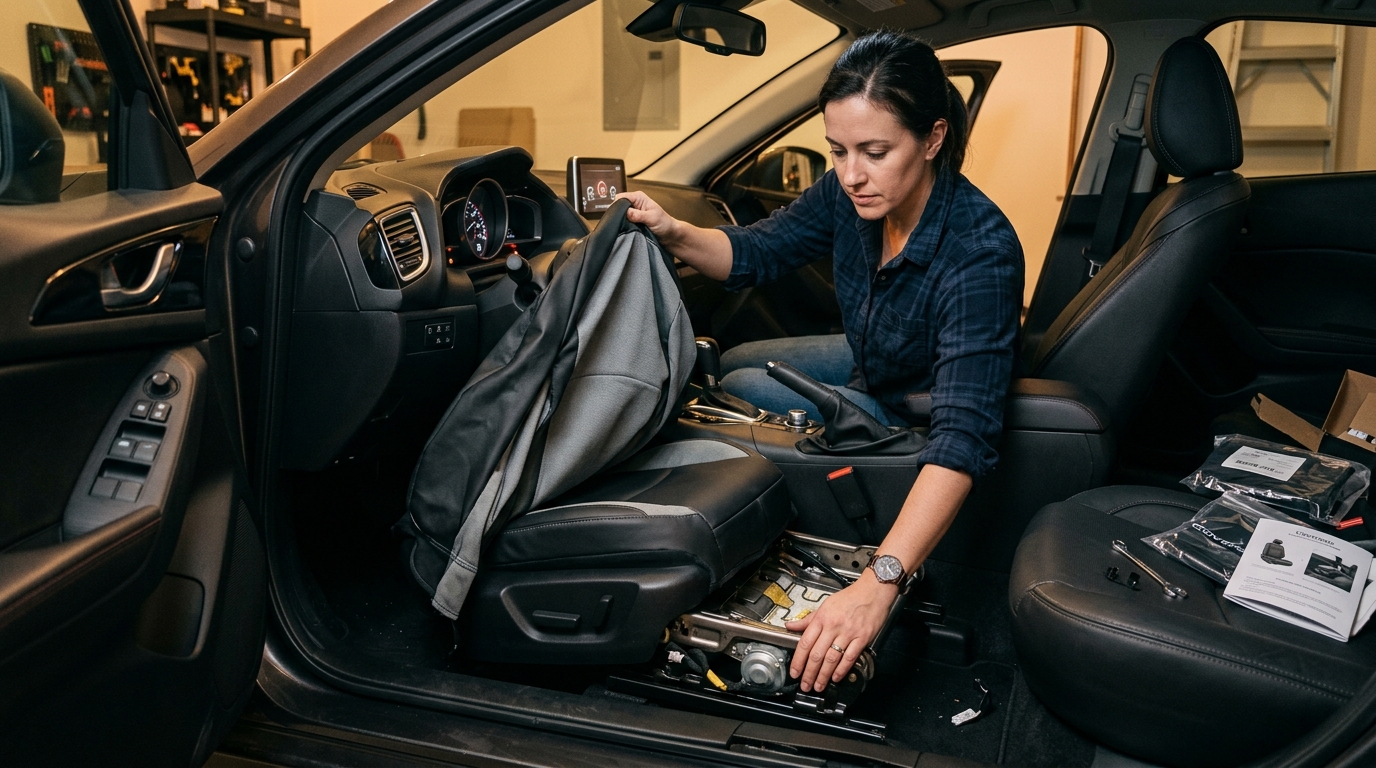
Creases from packaging are normal. Deep wrinkles from bad tension are different. For material behavior, Coverado's seat cover materials page explains how different surfaces feel and flex; in practice, padded leatherette relaxes faster in a warm cabin, while cloth-style covers grip better but can hold fold lines longer.
| Stop If You See This | What To Do |
|---|---|
| Airbag seam is covered | Remove the cover from that seat |
| Seat track scrapes a strap | Reroute the strap above the moving rail |
| Buckle is hard to reach | Loosen and pull the latch fully through |
| Power switch is covered | Raise the side flap and retighten |
| Cover only fits when stretched hard | Confirm the seat layout or request a return/exchange |
FAQ
Why won't my seat covers fit?
Most fit failures come from a headrest left in place, a left/right cover swap, or a rear flap that never reached the seat crease. Remove the cover, identify the top, center it between the bolsters, and tighten only after the fabric is flat.
How tight should covers be?
Seat covers should be snug enough that the cushion doesn't slide when you enter, but loose enough for seat tracks, buckles, and recline levers to move normally. After tightening, move the seat fully forward and back once; scraping, clicking, or binding means a strap needs rerouting.
Can seat covers block airbags?
Yes. A front seat cover can block a seat-mounted side airbag if it covers the SRS seam or lacks an airbag-compatible opening. Check the seat label and vehicle owner's manual, and don't cut the cover to make space.
Why do seat covers wrinkle?
Wrinkles usually mean the rear flap wasn't tucked deeply enough before tightening, or the cover was pulled harder on one side. Cold packaging can add shallow creases, but those relax faster once the cabin warms and the cover is smoothed from the center outward.
Before your next drive, do the sit-slide-buckle test on every seat you covered. If the fit still fights you, Coverado's 30-day free returns, free shipping, and 18-month warranty give you room to choose the right setup instead of forcing the wrong one.