


To learn how to measure for seat covers, measure the seat bottom, backrest, headrest, and every opening the cover must leave clear: side airbags, buckles, controls, armrests, and split-bench gaps. You’ll need a soft tape measure, your vehicle year/make/model/trim, and about 10 minutes per row.
If you’re comparing car seat covers for a 2021 Toyota RAV4, a 2024 Ford F-150 SuperCrew, or a 2018 Honda Civic, the same rule applies: size gets you close, but seat geometry decides whether the cover actually sits right.
How to Measure for Seat Covers
- Put the seat upright and remove bulky loose items.
- Measure seat bottom width and depth.
- Measure backrest width and height without the headrest.
- Record headrest size and post spacing.
- Mark side airbags, seat controls, armrests, buckles, and split-bench breaks.
- Compare the numbers with the cover size chart.
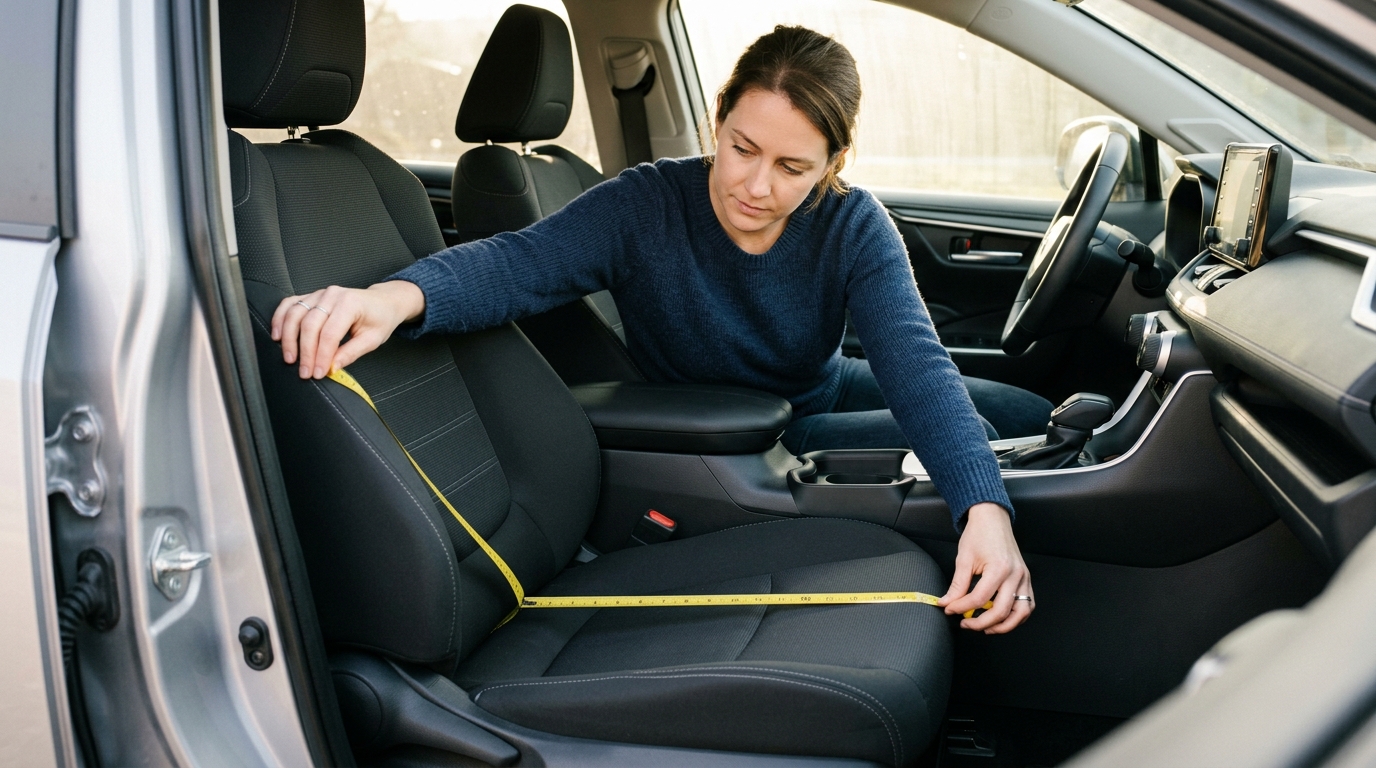
Use inches. Round up to the nearest half inch when checking fit ranges, but don’t stretch the tape over bolsters like you’re wrapping a gift. Measure the surface your body actually touches. A cover that fits the cushion but blocks a seat control or buckle is still the wrong fit.
Quick setup:
| Tool | Use it for | Tip |
|---|---|---|
| Soft tape measure | Cushions, backrests, headrests | Tailor’s tape bends around bolsters better |
| Phone photo | Seat shape and airbags | Photograph labels before ordering |
| Notes app | Widths, heights, split type | Write driver, passenger, rear separately |
| Owner’s manual | Airbag and seat details | Check factory seat notes by trim |
The real trick in how to measure for seat covers is measuring the interruptions. Seat covers fail at the odd spots: a side airbag tag, a lumbar knob, a fold-down rear armrest, or the little plastic trim where the seat belt buckle lives.
Seat Fit Risk Table
Most sizing guides stop at width and height. That misses the part that causes returns.
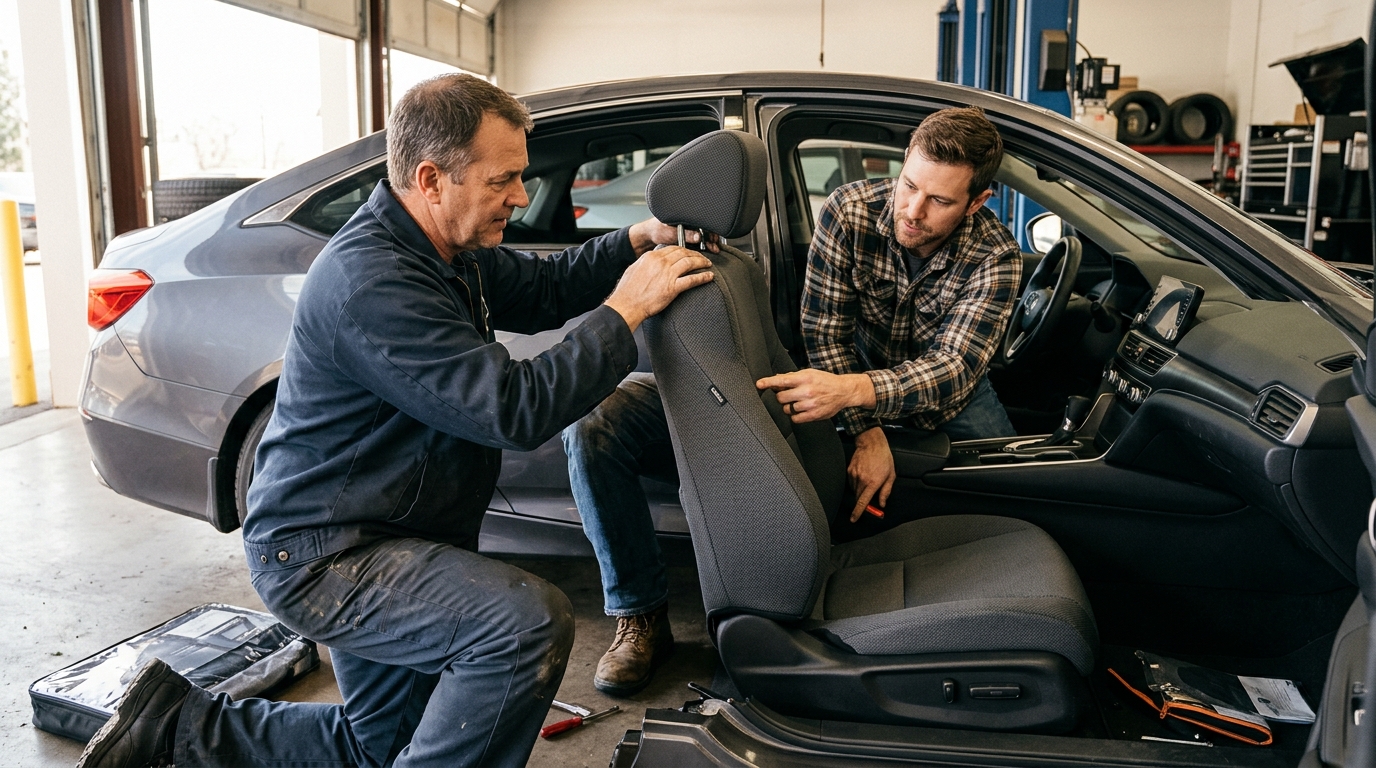
Think of your seat in two layers: the rectangle and the hardware. The rectangle tells you whether the cover can reach. The hardware tells you whether it should be there at all.
| Seat detail | Lower-risk fit | Higher-risk fit | What to record |
|---|---|---|---|
| Front seat shape | Flat bucket seat | Tall sport bolsters | Widest bottom and shoulder width |
| Side airbags | Clearly marked outer seam | No visible label, older used car | Airbag label location |
| Controls | Manual bar under seat | Side power controls | Control position and clearance |
| Rear split | One-piece bench | 60/40, 40/20/40, or fold-down armrest | Split line and armrest width |
| Headrests | Two-post removable | Fixed or unusually wide | Post spacing and headrest height |
Safety comes first here. The National Highway Traffic Safety Administration says side-impact airbags deploy very fast because there’s little space between the passenger and the impact point. If your front seat has side airbags, choose covers with compatible side openings or stitching, and never force fabric over a marked deployment area.
Seat belts matter too. NHTSA reported a 91.3% U.S. seat belt use rate in 2025 and says belts are designed to hold passengers inside the vehicle during a crash. Keep buckle stalks exposed and reachable; a cover shouldn’t make anyone fish for the latch under fabric.
Front Seat Measurements
Start with the driver’s seat because it usually has more wear, more controls, and more adjustment hardware than the passenger seat. Set the seatback to a normal upright position. If you measure while it’s reclined, the backrest height can read oddly long.
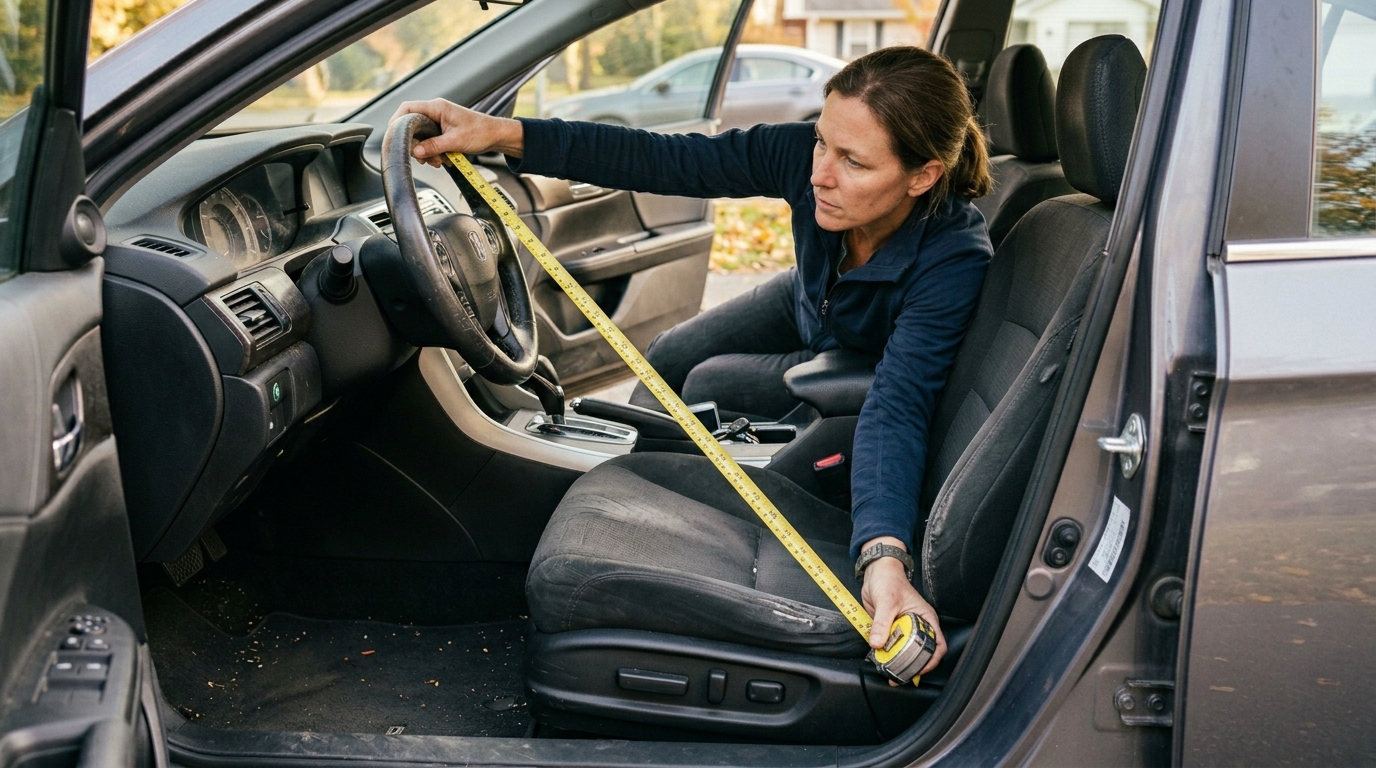
Measure these points:
- Seat bottom width: left edge to right edge across the widest usable cushion.
- Seat bottom depth: front lip to the crease where the backrest begins.
- Backrest width: widest point across the shoulders, not the narrow waist area.
- Backrest height: seat crease to the top of the backrest, excluding the headrest.
- Headrest size: width, height, thickness, and distance between posts.
- Hardware clearance: side levers, power buttons, armrests, lumbar knobs, and airbag labels.
A 2020 Chevrolet Silverado front seat with a built-in armrest needs a different opening than a 2022 Toyota Corolla bucket seat. Same idea, different problem. The Silverado may have the cushion width to fit, then fail because the armrest can’t move.
If your numbers sit inside the listed range, Coverado’s universal seat covers are a practical match for daily drivers that need a cleaner look without waiting for a vehicle-specific pattern. Universal fit works best when the seat has removable headrests, exposed buckles, and standard bucket-seat proportions.
One caution for heated or ventilated seats: don’t add a thick padded cover just because the measurements work. Extra padding can reduce the feel of seat ventilation and slow heat transfer. A thinner leatherette or breathable fabric cover usually makes more sense for a 2023 Tesla Model Y or a 2024 Hyundai Tucson with factory climate features.
Rear Bench Measurements
Rear seats are where “close enough” gets expensive. A front bucket cover can be adjusted and tugged into place. A rear bench cover has to match the whole row: headrests, buckles, split folds, center armrest, and child-seat access.
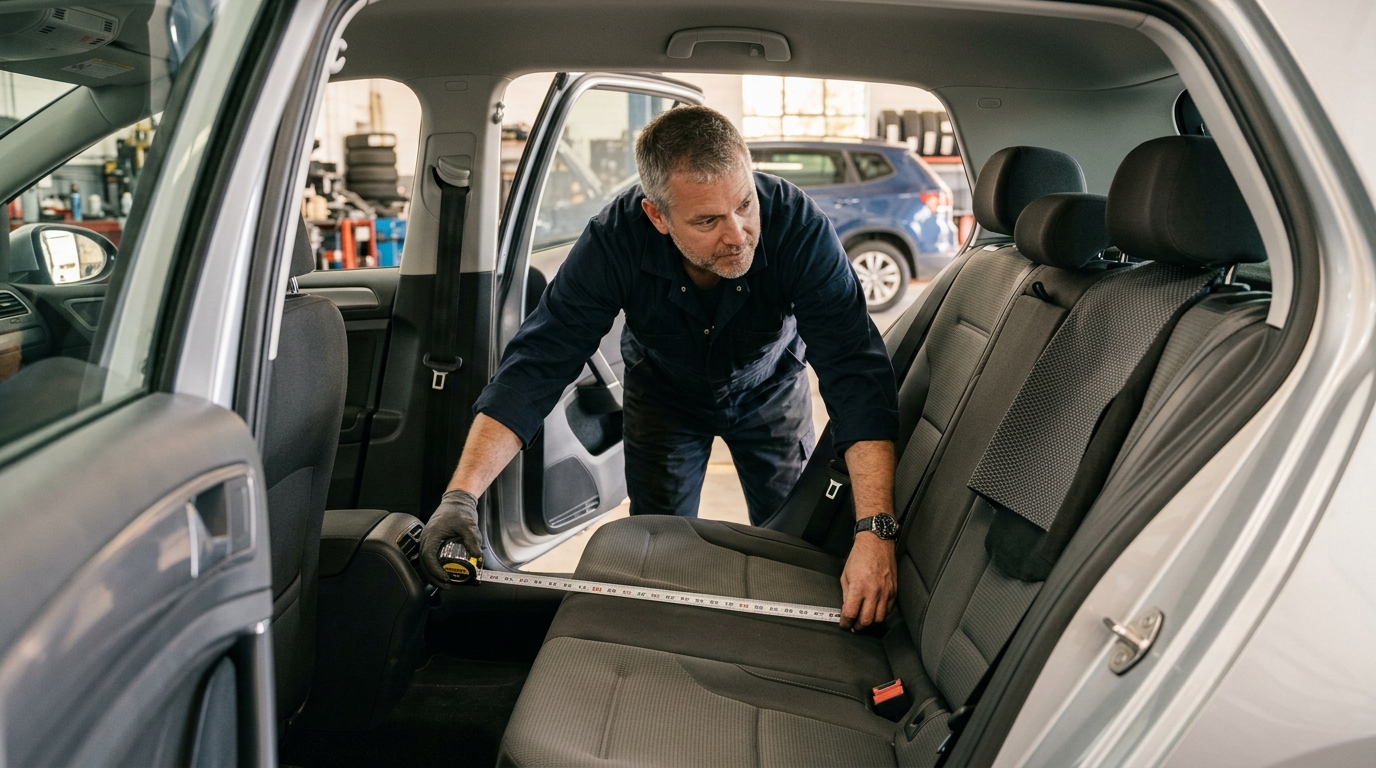
Measure the rear bench like this:
| Rear seat area | Measure | Watch for |
|---|---|---|
| Bench width | Door-side edge to door-side edge | Plastic trim can reduce usable width |
| Seat depth | Front cushion edge to back crease | Raised bolsters change the true depth |
| Backrest height | Crease to top of backrest | Don’t include adjustable headrests |
| Split type | 60/40, 40/20/40, 50/50, or solid | Fold lines need separate cover panels |
| Buckles | Location and number | Buckles must stay above the cover |
| Center armrest | Width and fold position | Covers may need a zipper or flap |
A 2021 Toyota Tundra CrewMax rear bench is wide and upright. A 2019 Subaru Outback rear seat has a narrower cushion, a fold-down center armrest, and different headrest spacing. If you buy one cover only because both vehicles say “5 seats,” you’re guessing.
For families, measure with the real setup in mind. If a booster seat sits behind the passenger seat every weekday, check that the cover doesn’t bunch under the booster base or hide the buckle. If your rear row folds often for cargo, choose a split-compatible set instead of a one-piece cover that fights the fold.
When you’re replacing the whole cabin at once, this is where full set car seat covers save time. Match the front buckets first, then confirm the rear bench split before you choose the final set.
Universal Cover Fit Check
Universal seat covers work best for standard bucket seats and common rear benches. Custom-fit covers work better when the seat has unusual bolsters, fixed headrests, integrated seat belts, or trim-specific storage pockets.
| Choose this | Best for | Drawback |
|---|---|---|
| Universal fit | Most sedans, compact SUVs, daily commuters | Less exact around unusual bolsters |
| Vehicle-specific fit | Trucks, sport seats, rare trims | Usually costs more and may take longer |
| Front-only set | Worn driver/passenger seats | Rear row stays mismatched |
| Full set | Whole-cabin refresh | Requires more rear-seat checking |
After the cover arrives, dry-fit it before clipping straps under the seat. Sit in it. Move the seat forward and back. Recline the backrest. Buckle the belt. Fold the rear bench. If anything pulls tight across a safety label or blocks a latch, stop and adjust before driving.
Coverado customer reviews often mention installation in under 30 minutes when measurements are checked first. The fast installs usually share the same pattern: removable headrests, no hidden rear buckles, and a clean seat surface. Material care matters after that, so this how to clean car seat covers guide is worth reading before the first spill happens.
FAQ
How do I measure bucket seats?
Measure the seat bottom width and depth, then measure the backrest width and height from the seat crease. Record headrest size, post spacing, side controls, armrests, and airbag labels before ordering.
Are universal seat covers one size?
No. Universal seat covers fit a range of common seat sizes, but you still need to compare your measurements with the product fit chart. Seat shape, headrests, buckles, and airbags affect fit.
Should covers fit side airbags?
Yes. If your seat has side airbags, use airbag-compatible covers and keep the marked deployment area clear. Don’t install a cover that stretches across or hides the side airbag label.
How long does installation take?
Most Coverado seat cover installs take under 30 minutes based on customer reviews. Rear benches, split seats, fixed headrests, and tight buckle openings can add time.
Coverado designs seat covers for real daily use: weekly updated styles, free shipping, 30-day free returns, and an 18-month warranty. Measure once, check the fit details, then choose the set that matches how your car is actually used.