


You can use seat covers with child car seats only when the child-seat manual and vehicle manual allow the setup, and the cover doesn't change the car seat's installation. If you're unsure, remove the cover under the child seat; safety beats upholstery protection every time.
Seat Covers with Child Car Seats
Use seat covers with child car seats only after two checks: the child-seat manual allows the cover, and the vehicle manual doesn't conflict. Then check fit. The cover must leave anchors, belts, buckles, and tethers open, and the car seat should move less than 1 inch at the belt path. When unsure, remove it.
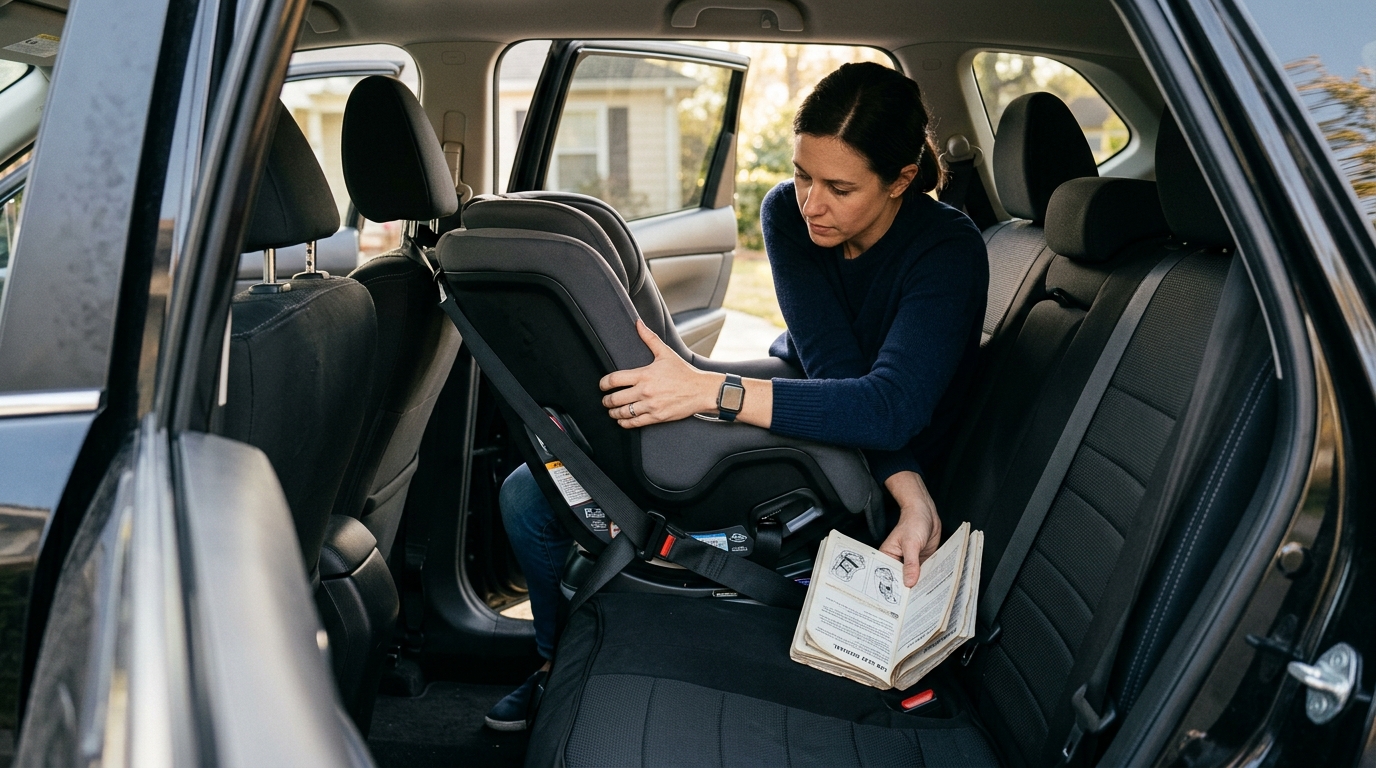
Coverado car seat covers are vehicle upholstery covers. They aren't child-restraint accessories, and they shouldn't be treated like part of a Graco Extend2Fit, Britax One4Life, Chicco NextFit Zip, or Nuna RAVA. That distinction matters. The crash-tested system is the child car seat plus the vehicle seat belt or LATCH system, installed exactly as the manuals say.
Here’s the practical version:
| Setup | Better Choice | Check Point | Red Flag |
|---|---|---|---|
| Rear seat with a harnessed child seat | Leave that seating position bare unless approved | Less than 1 inch of movement at belt path | Thick foam, bunching, sliding |
| Rear seat next to a child seat | Cover is usually easier to manage | Buckle and anchor access | Cover flap hides buckle |
| Front seats | Fine for adults if airbags and controls stay clear | Side airbag seams, seat controls | Cover blocks airbag label |
| Booster rider | Only if booster sits flat | Lap belt on upper thighs | Booster rocks or slips |
A small wrinkle can become a big annoyance. You tighten the car seat, drive to preschool, then notice the base shifted because the cover compressed under the edge. That’s the moment to stop, pull the cover, and reinstall on the bare vehicle seat.
Manuals Decide the Fit
The manual wins.
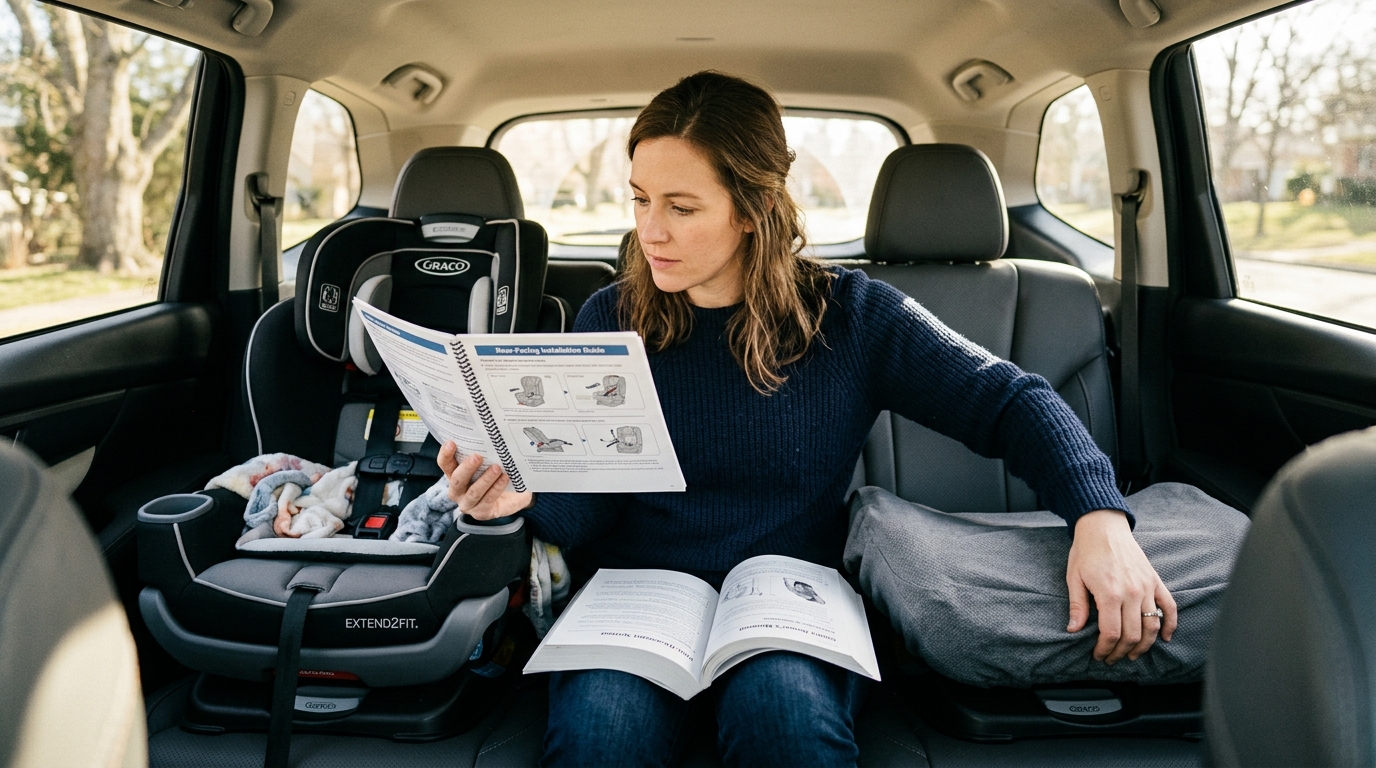
The National Highway Traffic Safety Administration tells caregivers to follow the child-seat manufacturer’s instructions and read the vehicle owner’s manual for seat belt, lower anchor, and tether installation. The American Academy of Pediatrics gives the same manual-first advice in its car seat guidance for families: read both manuals each time you install the seat.
That sounds boring until you compare two real seats. A Britax manual may allow a specific Britax vehicle seat protector. A different manual may say no extra padding under the restraint. A Toyota RAV4 owner’s manual may handle center-seat LATCH differently than a Ford F-150 SuperCrew, Subaru Outback, or Honda Odyssey manual. The stricter instruction is the one you follow.
Are child-seat covers different?
Yes. A vehicle seat cover protects the car’s upholstery. A child-seat cover is the fabric shell on the restraint itself. Don’t replace a Graco, Britax, Chicco, or Nuna child-seat cover with an unapproved cover unless that child-seat brand approves it for that exact model.
Also, don’t add padding under or behind your child. The AAP says car-seat inserts should come with the seat or be made by the manufacturer for that specific seat. That rule applies to infant inserts, head supports, strap pads, and clever-looking add-ons you find at 1 a.m. while shopping half-awake.
LATCH Access and Belt Paths
A seat cover can be safe-looking and still cause a bad install.
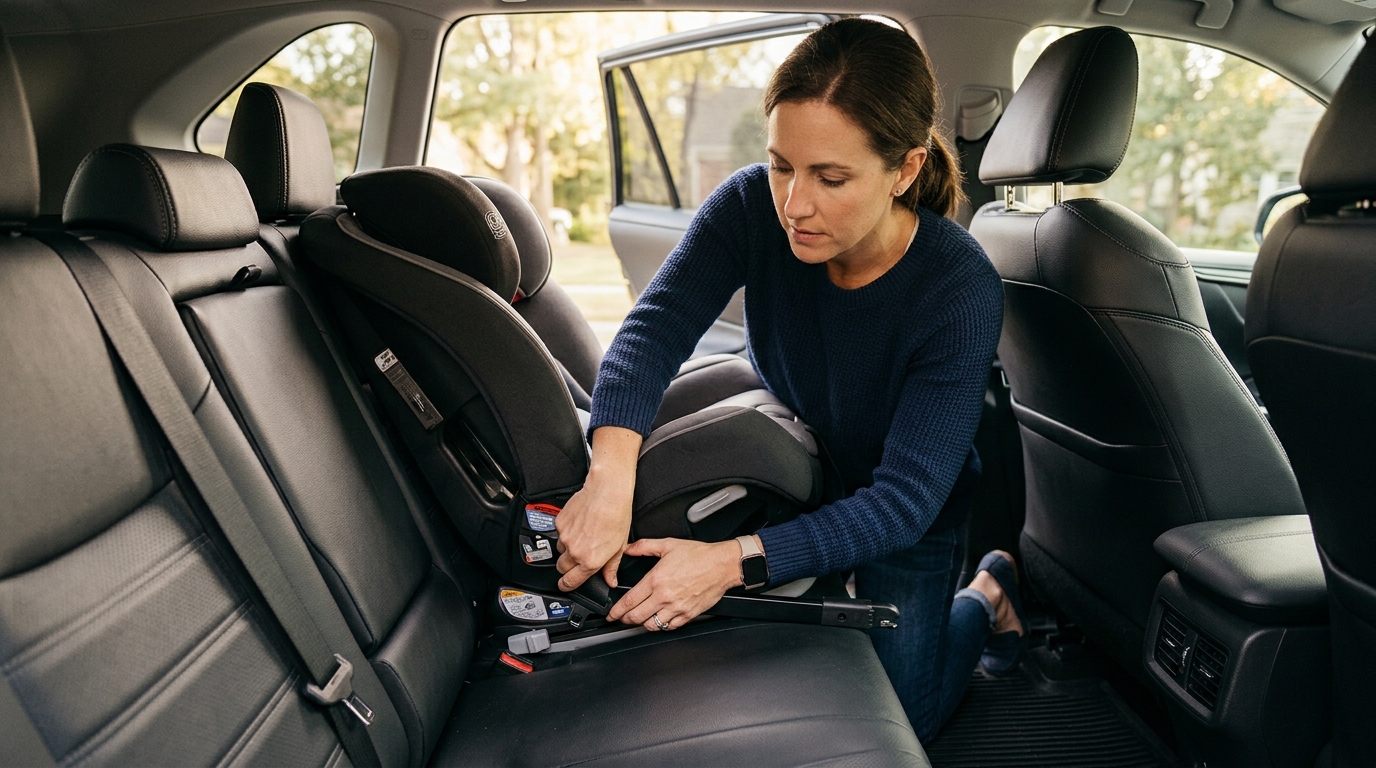
Lower anchors sit in the seat bight, where the vehicle seat back meets the bottom cushion. A cover that stretches over that area can hide the anchors, change the strap angle, or make you route the connector through a narrow slit that wasn’t there in the bare seat. If you’re using the seat belt instead, the cover still can’t bury the buckle stalk or push the buckle against the child seat shell.
Check four physical points before you call the install done:
- Lower anchors are visible and easy to reach.
- Seat belt or LATCH webbing follows the correct belt path.
- Buckle stalk isn’t trapped under a flap, seam, or cushion edge.
- Top tether reaches the correct tether anchor without rubbing the cover.
NHTSA and AAP both say the lower anchors and seat belt are separate installation methods unless both the car-seat maker and vehicle maker allow using them together. AAP also notes that lower anchors are rated for a combined 65 pounds, meaning child plus car seat. A 30-pound child in a 25-pound convertible seat is already at 55 pounds. Add growth, and you may need to switch to a locked seat belt sooner than expected.
Can LATCH go through covers?
LATCH can pass through a seat cover only when the cover has clear openings and the child-seat manual allows the setup. The connector should attach directly to the vehicle’s lower anchor, not fight through foam, tight fabric, or a decorative seam. If access feels forced, remove the cover.
Forward-facing seats add one more check: the top tether. In sedans it may connect to the rear shelf; in SUVs, minivans, hatchbacks, and pickups it may connect to the seat back, floor, ceiling, or cargo-area anchor. Don’t guess. Tether anchors can look a lot like cargo hooks.
Mat Thickness and Compression
The tricky part of using seat covers with child car seats is usually compression, not style.
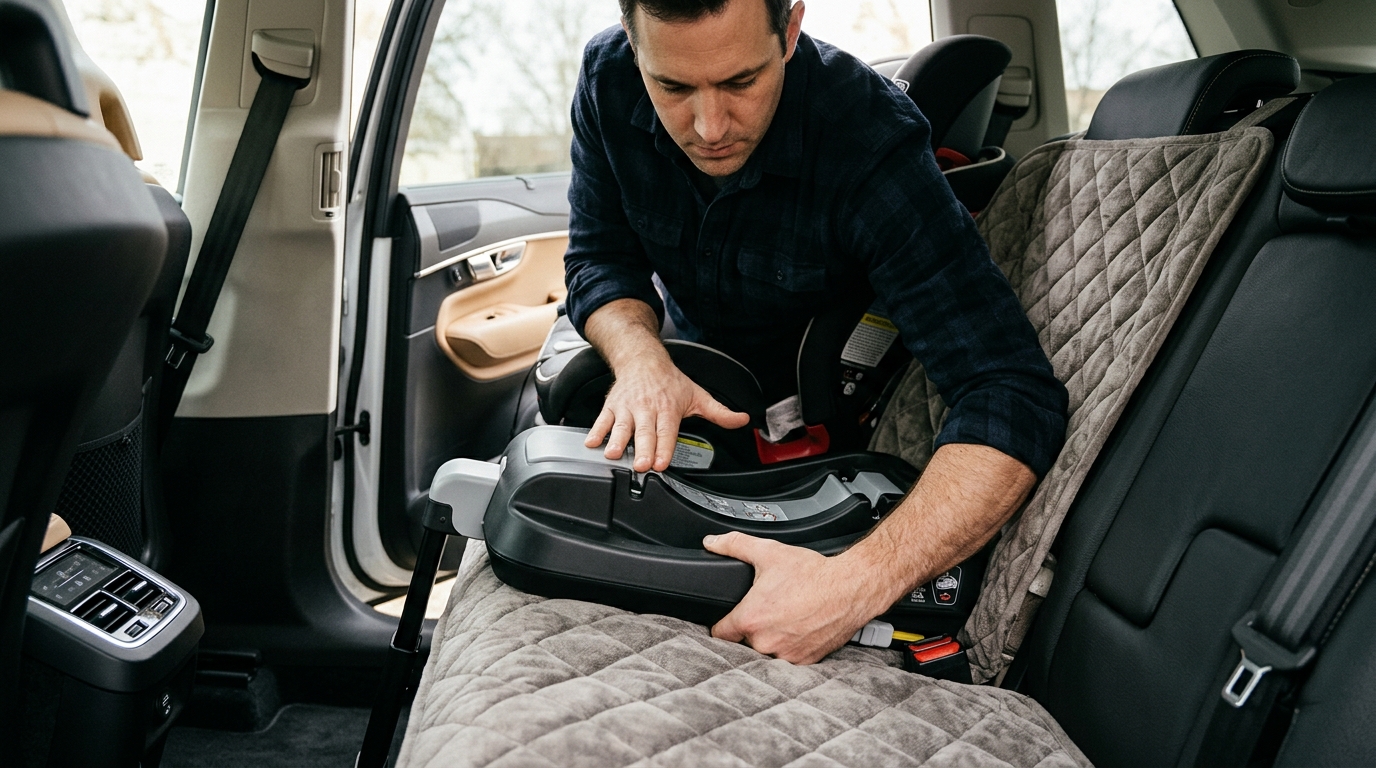
A thin fabric layer behaves differently from a thick quilted cover, gel pad, pet hammock, or rubber mat with raised edges. During a crash, soft layers can compress. AAP warns that bulky winter coats can compress under harness straps and leave dangerous slack; the same physics is why thick material under a car seat deserves suspicion.
Use this filter before putting anything under a child restraint:
| Material Under Child Seat | Use It? | Why |
|---|---|---|
| Manufacturer-approved protector | Usually yes | Tested or allowed by that seat maker |
| Thin towel, if manual allows | Sometimes | Minimal thickness, easy to remove |
| Thick foam or gel mat | Skip it | Compression can change tightness |
| Pet hammock or cargo liner | Skip it | Can block belt paths and anchor access |
Can car seat mats slip?
Yes, car seat mats can slip if they have slick backing, raised edges, or soft padding that shifts under load. A mat also can make a loose install feel tight for the first minute. Install the child seat, check for less than 1 inch of movement, drive, then check again.
One more test helps: install the child seat on the bare vehicle seat first. Feel how tight it gets. Then try the approved cover or mat. If the second install takes more force, sits crooked, or leaves the seat floating on padding, the cover is the problem.
Booster Seats and Covers
Boosters are less forgiving than parents expect.
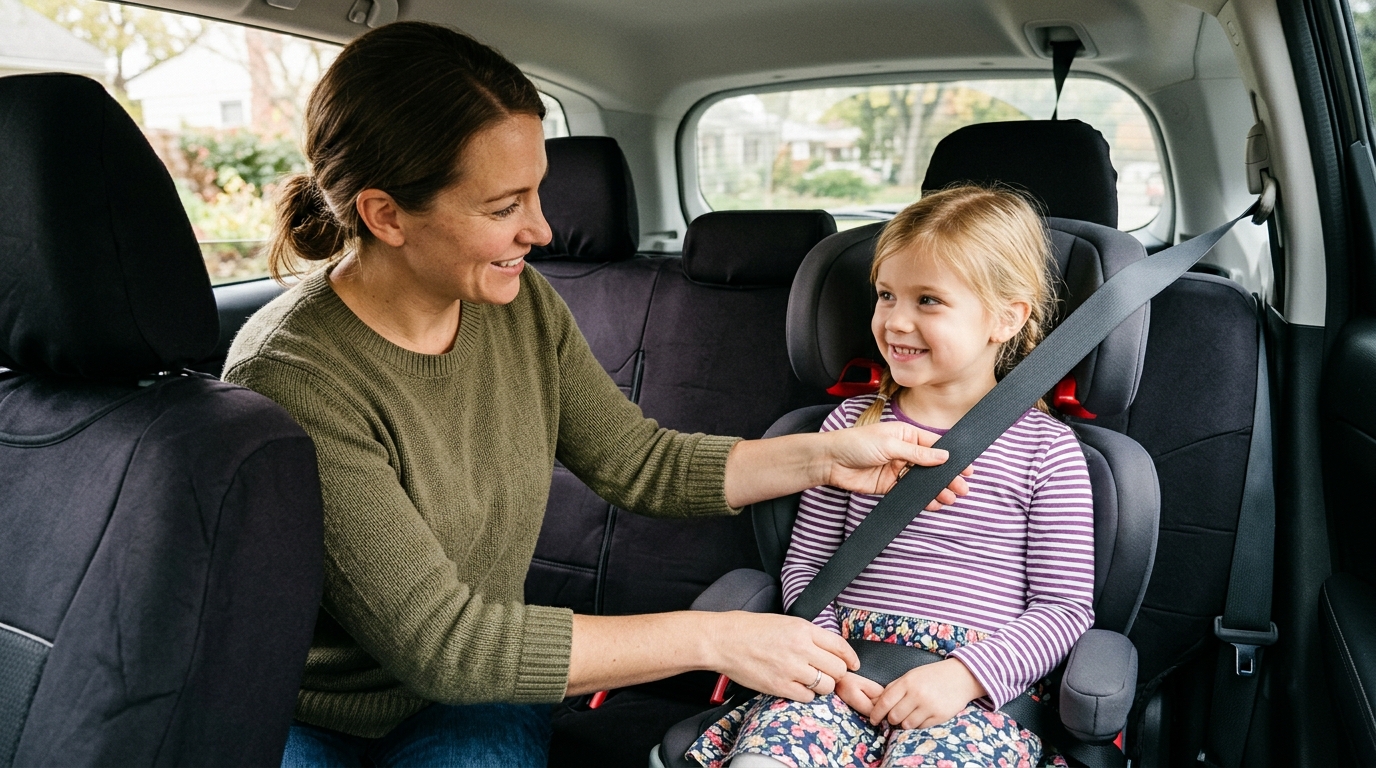
A belt-positioning booster needs the vehicle seat belt to fit the child, not the booster. The lap belt should sit low across the upper thighs, and the shoulder belt should cross the chest and shoulder. If a seat cover makes a backless booster slide forward, tilt, or sit on a raised seam, the belt fit can change.
Planning a whole-cabin refresh? Coverado full set seat covers can protect front and rear seats, but treat the child-seat position as its own decision. Install the full set around the child restraint area if needed. In a family SUV with a 60/40 split bench, that may mean covering the unused side and leaving the car-seat spot bare.
Can boosters sit on covers?
A booster can sit on a vehicle seat cover only if the booster sits flat, the child doesn’t slide, and the belt fit stays correct. Check the booster manual, too. High-back boosters, backless boosters, and LATCH-equipped boosters can have different rules even within the same brand.
If you’re comparing rear bench layouts before buying covers, our guide to full set car seat covers is useful for split benches, headrests, armrests, and rear-seat coverage. Just make the child restraint the last fit check, not the first assumption.
Cleaning Child-Seat Spots
Crumbs collect where the child seat meets the vehicle seat. So do crushed crackers, milk drips, sunscreen, and those mystery sticky spots nobody admits to creating.
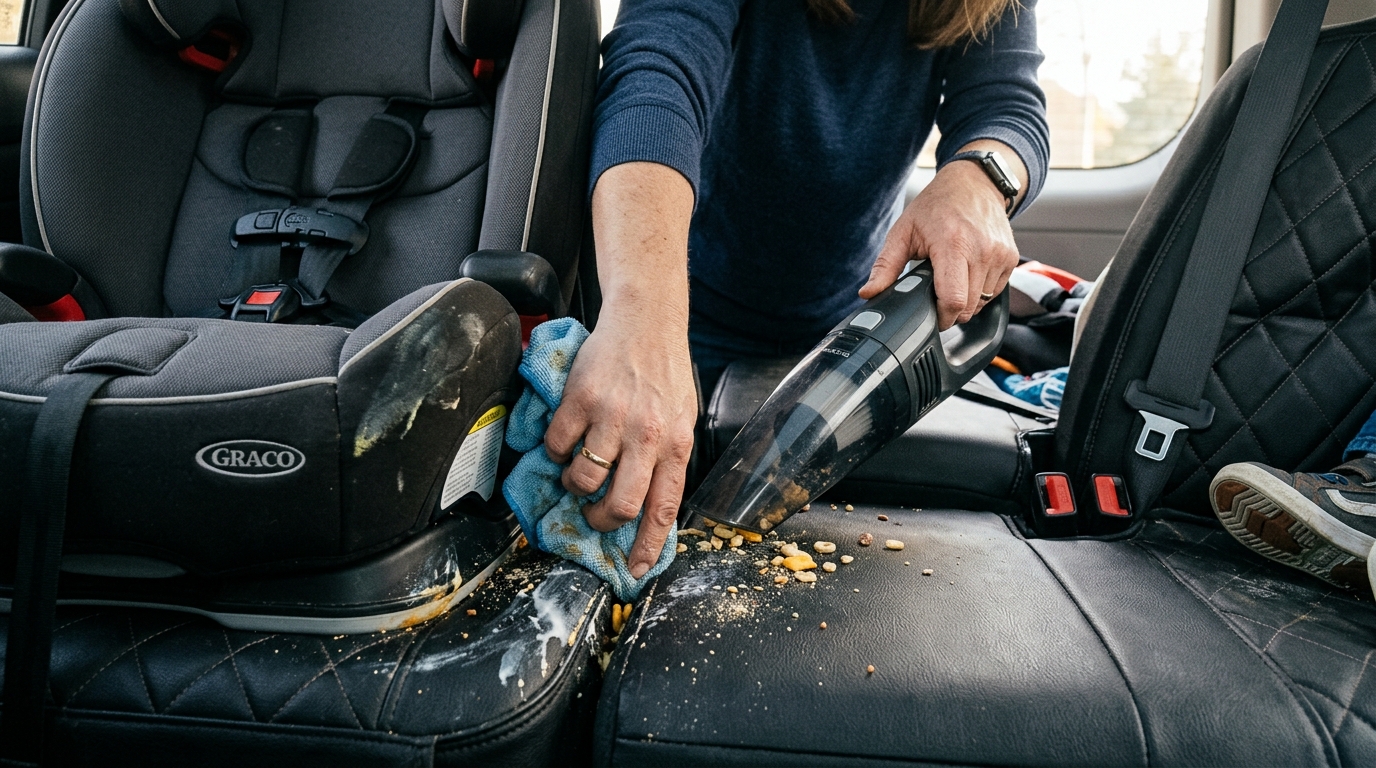
Set a monthly reminder. Take a photo of the installed car seat before removal, uninstall it, vacuum the vehicle seat, clean the seat cover, then reinstall from the manual. If you need material-specific care, this Coverado guide on how to clean car seat covers breaks down fabric, leather, and faux leather cleaning without wrecking the finish.
Coverado customers often report installation in under 30 minutes, but add extra time when a child restraint is involved. Ten quiet minutes with the manual is better than rushing because school pickup starts in seven.
Do not soak a child-seat harness unless that child-seat manual says you can. Harness webbing is safety equipment, not laundry. Usually, the manual calls for spot cleaning with mild soap and water.
FAQ
Are seat protectors safe?
Seat protectors are safe only when the child-seat manual allows them. Choose a thin, approved protector and skip thick foam, gel padding, pet hammocks, or mats that hide anchors and buckles.
Should rear covers come off?
Remove rear seat covers under a child restraint if the manual doesn’t clearly allow them. You can still use covers on other seating positions if buckles, anchors, tethers, and airbags stay clear.
Do covers affect car-seat warranties?
They can if the child-seat maker bans aftermarket layers under the restraint. Check the child-seat manual first, then ask the manufacturer if the wording isn’t clear.
Before you order from Coverado, look up your child-seat PDF and your vehicle manual, then decide which seats can be covered safely. Pick the design you like, use Coverado’s free shipping and 30-day free returns if the fit isn’t right, and keep the child-seat position manual-approved. The 18-month warranty is nice. A correct install matters more.